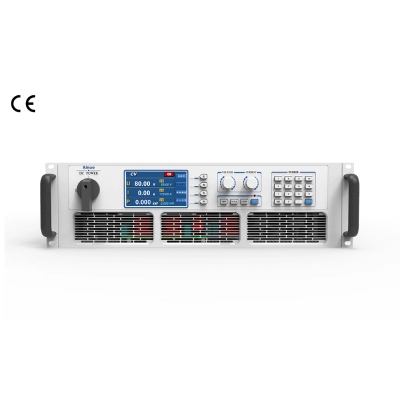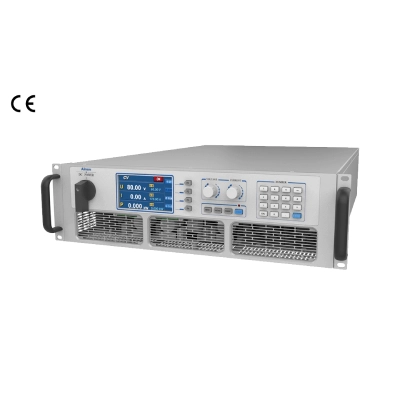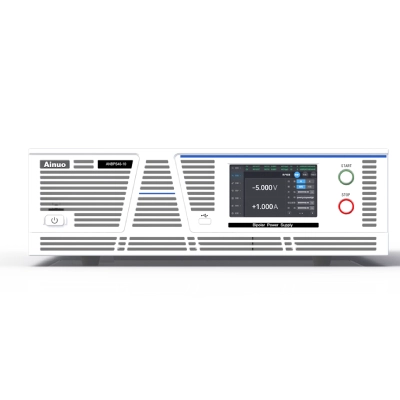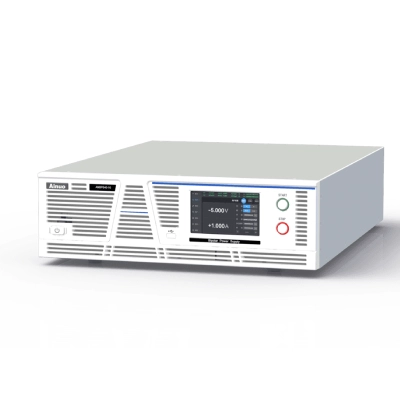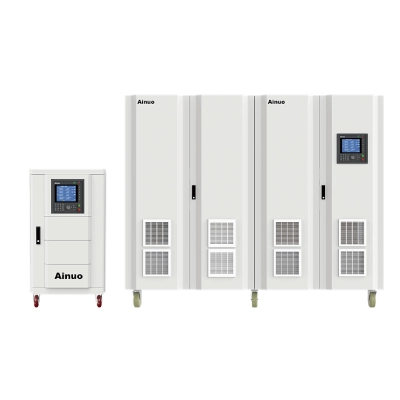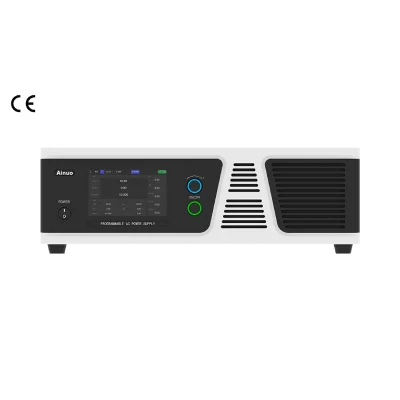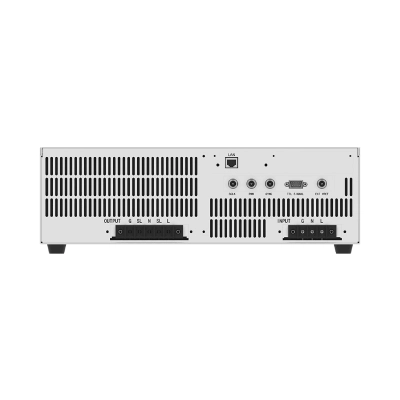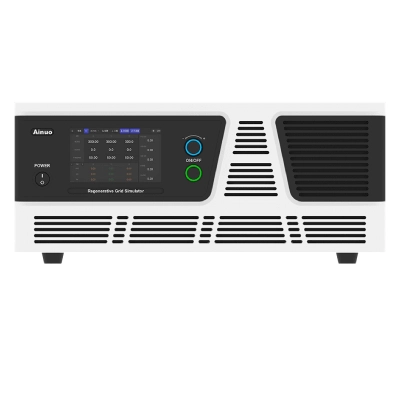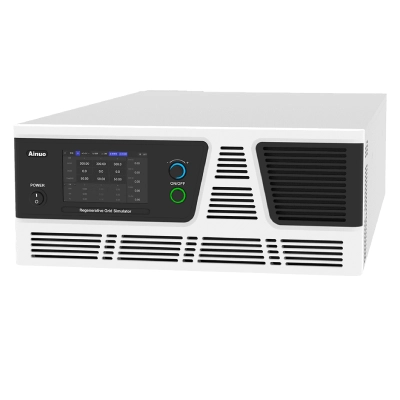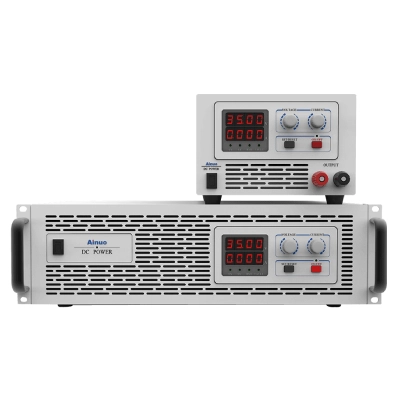

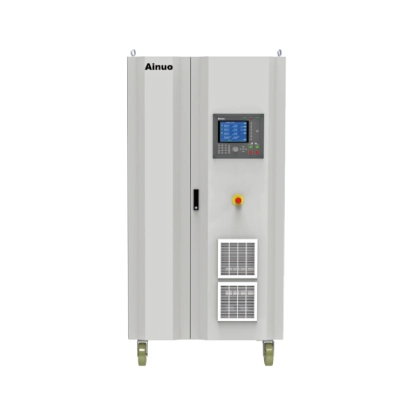
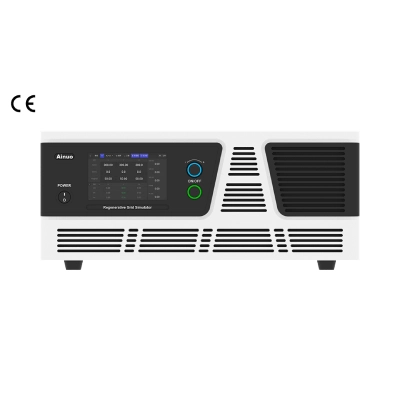
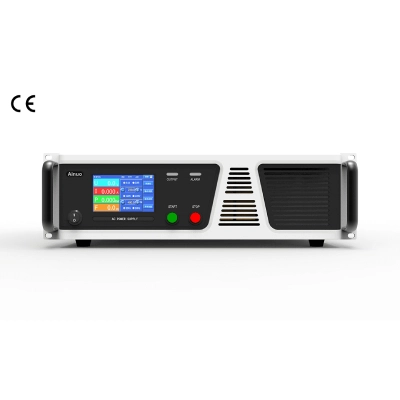
The ANGS(F) Series Programmable Grid Simulator is specially developed for the new energy industries such as photovoltaic and wind power, applicable to inverter testing and verification. The power supply adopts FPGA digital control technology, able to completely realize the intelligent test process of inverters. With sine wave output mode and a variety of harmonic superposition output mode, single-phase, two-phase or three-phase low (zero) voltage ride-through, it is capable of fully simulating various abnormal grid conditions, able to assist in completing the overvoltage/undervolt age, overfrequency/underfrequency, unbalance and anti-islanding protection function tests, meeting the testing requirements of the relevant laws and regulations.
It has advanced SPWM technology and FPGA digital processing technology and high-power switching power supply technology with high power density.
It has multiple output modes, including AC, DC, and AC+DC.
It has 100% energy feedback to the grid, and the power supply can operate in all four quadrants.
This regenerative AC grid simulator power supply can realize three-phase and single-phase parallel operation, and the single-phase output after parallel connection can reach the maximum capacity of the whole unit. It has a harmonic synthesis function for 2-50 times harmonics with a synthesis bandwidth of 3,000Hz.
It has three programming functions: sequence, pulse, and step, which simulate the interference in the actual grid, with a minimum programming step size of 1ms. It has a 5-inch LCD, which is small in size, light in weight, and 4U in height, meeting the installation requirements of standard cabinets. It is equipped with RS485 and Ethernet communication interfaces as standard, with optionalRS232 and GPIB communication interfaces. It comes with upper computer software, which can import and export arbitrary waveforms and set parameters through the upper computer.
High and low voltage ride-through: The programmed output mode set for the photovoltaic industry is used to simulate the process of grid fall and recovery, and is capable of simulating a variety of modes such as zero voltage ride-through, low voltage ride-through, high voltage ride-through, and a combination of high and low voltage ride-through, and arbitrarily setting the voltage, maintenance time, ride-through angle, recovery voltage, etc.

Unbalance: U, V and W phases and voltages can be set separately, or the degree of unbalance can be set directly.

Transient change: An output method that simulates transient change in voltage, able to perform 1ms zero voltage ride-through.

Programming: It has universally programmable settings, where voltage, frequency and phase can be changed according to single-step settings. Trigger phase and loop count can be set, and parameters of three-phase outputs can be separately configured. Any phase jump/ride-through test can be achieved.
Harmonics: The power supply has the harmonic editing function (2 - 50 times), able to add harmonics based on the standard sine wave, and set the harmonic content and angle, with single harmonic up to 30%, and the total harmonic content and number of harmonic superpositions unlimited. Moreover, it has 50 harmonic storage groups for quick call.
Interharmonics: The power supply has the interharmonic editing function, allowing addition of interharmonics based on the standard sine wave. Interharmonic trigger angle, frequency, content, and scan time can be set, with an interharmonic frequency range of 16 - 2,500Hz.

Flicker: The power supply can simulate the flicker characteristics of the power grid and test the flicker adaptation of the DUT.

Large-size color LCD: numeric key input, knob operation.

Computer control software

Need Help?
We are here!